
Noble County Criminal Court Records
A criminal court record is the court case file kept after the prosecutor files charges. It is broader than a charge list and different from a sheriff report. The case file can show the filed counts, probable-cause and initial-hearing activity when public, bond, counsel appointment, hearings, motions, plea, trial setting, verdict or plea agreement, sentence, restitution, fines, costs, probation, no-contact orders, warrants, body attachments, and expungement activity. For a closer look at filed counts apart from the full case file, use the Noble County arrest records and court charges page.
Noble County criminal case routing comes from local court structure. The Circuit Court page says Level 3, Level 4, and Level 5 felonies are generally filed in Noble Circuit Court. Superior Court II's official page says misdemeanors are generally filed there, along with traffic infractions and ordinance violations. The prosecutor represents the State in felony and misdemeanor prosecutions, juvenile delinquency matters, and traffic or infraction prosecutions committed within Noble County.
One assigned image for this page comes from the Noble County Prosecutor official page.
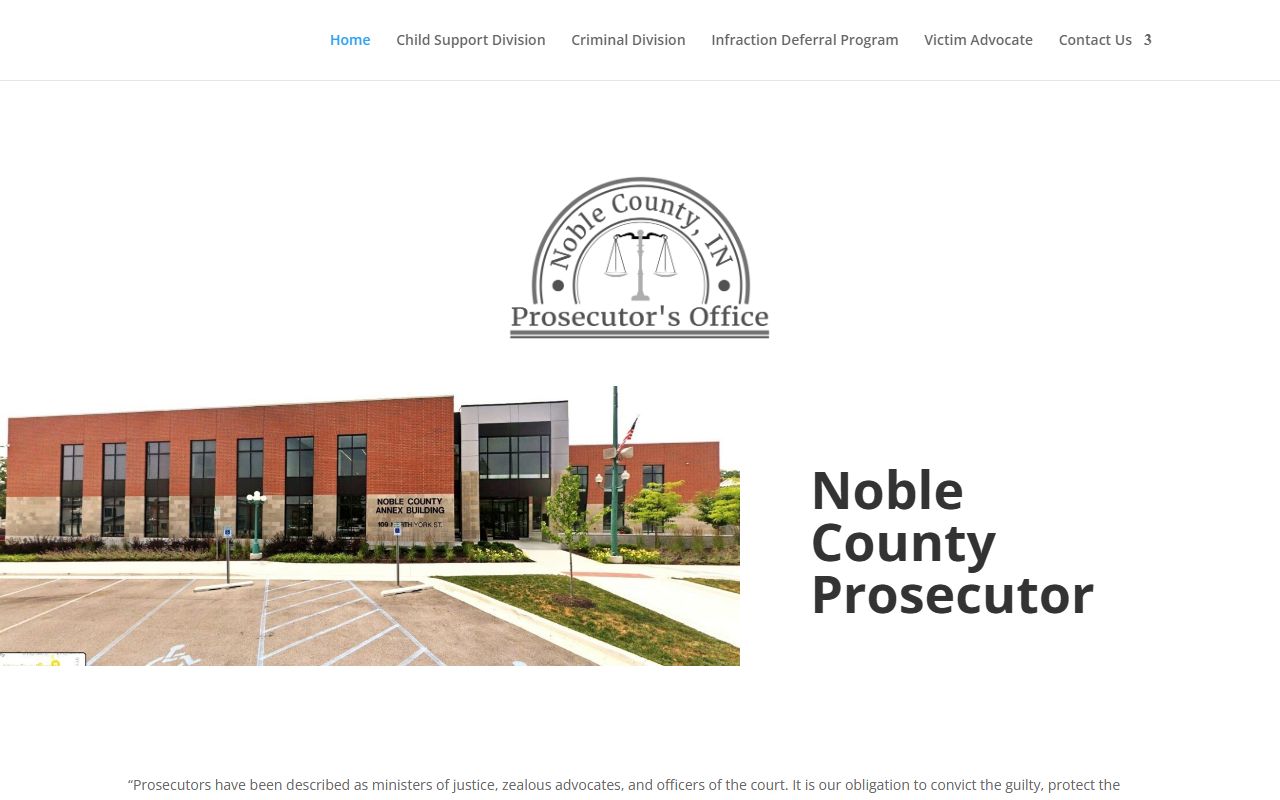
The prosecutor source supports the distinction between an arrest and the court case filed for the State.
Search Noble County Criminal Court Records
Public Noble County criminal court records are searched through Indiana MyCase. Use a defendant name, cause number, attorney search, or case-type filter, then narrow the search to Noble County or to the Noble court shown in the result. MyCase is the best first step because it can show public docket entries, charges, hearing history, disposition, sentencing entries, and related financial assessments. If the case or document is not available online, use the courthouse public terminal or contact the Clerk of the Noble County Courts.
- Open the Indiana public case search portal.
- Search by defendant name or Indiana cause number if known.
- Use Noble County, Noble Circuit Court, Noble Superior Court I, or Noble Superior Court II filters when available.
- Open the case and read the chronological case summary for charges, hearings, pleas, orders, disposition, and sentencing.
- Check for public document links, then contact the clerk if a certified copy or non-online document is needed.
Online access has limits. Juvenile delinquency, sealed cases, expunged records, some protection-order information, mental-health details, protected addresses, minor identifiers, and sensitive financial data are not ordinary public search results. Attorney access through Courts Portal and party access through MyCase can differ from public access, so a public user may see less than a party or attorney.
Noble County Criminal Case Flow
Criminal court records are easiest to read as a sequence. Law enforcement may arrest or refer an investigation, but the criminal court record starts when a charge is filed in court. After filing, the record may show an initial hearing, bond or release conditions, appointment or appearance of counsel, pretrial conferences, discovery-related motions, plea negotiations, trial settings, disposition, and sentencing. Probation and Community Corrections can appear later when the sentence includes supervision, home detention, work release, alcohol monitoring, or problem-solving court participation.
Case flow: Charges Filed › Initial Hearing or Arraignment › Pretrial and Motions › Plea or Trial › Disposition › Sentencing
| Stage | What Happens |
|---|---|
| Charges filed | The prosecutor files formal counts, often called an information in Indiana criminal practice. |
| Initial hearing or arraignment | The court addresses the charge, rights, counsel, bond, and future settings. |
| Pretrial and motions | The docket may show conferences, continuances, discovery disputes, suppression motions, and other requests. |
| Plea or trial | The defendant may plead, reach an agreement, proceed to trial, or have counts amended or dismissed. |
| Disposition | The record states the outcome by count or case, such as guilty, dismissed, acquitted, or other result. |
| Sentencing | The court records jail, prison, probation, restitution, fines, costs, no-contact terms, or other conditions. |
The assigned community-corrections image comes from the Noble County Probation and Community Corrections page.
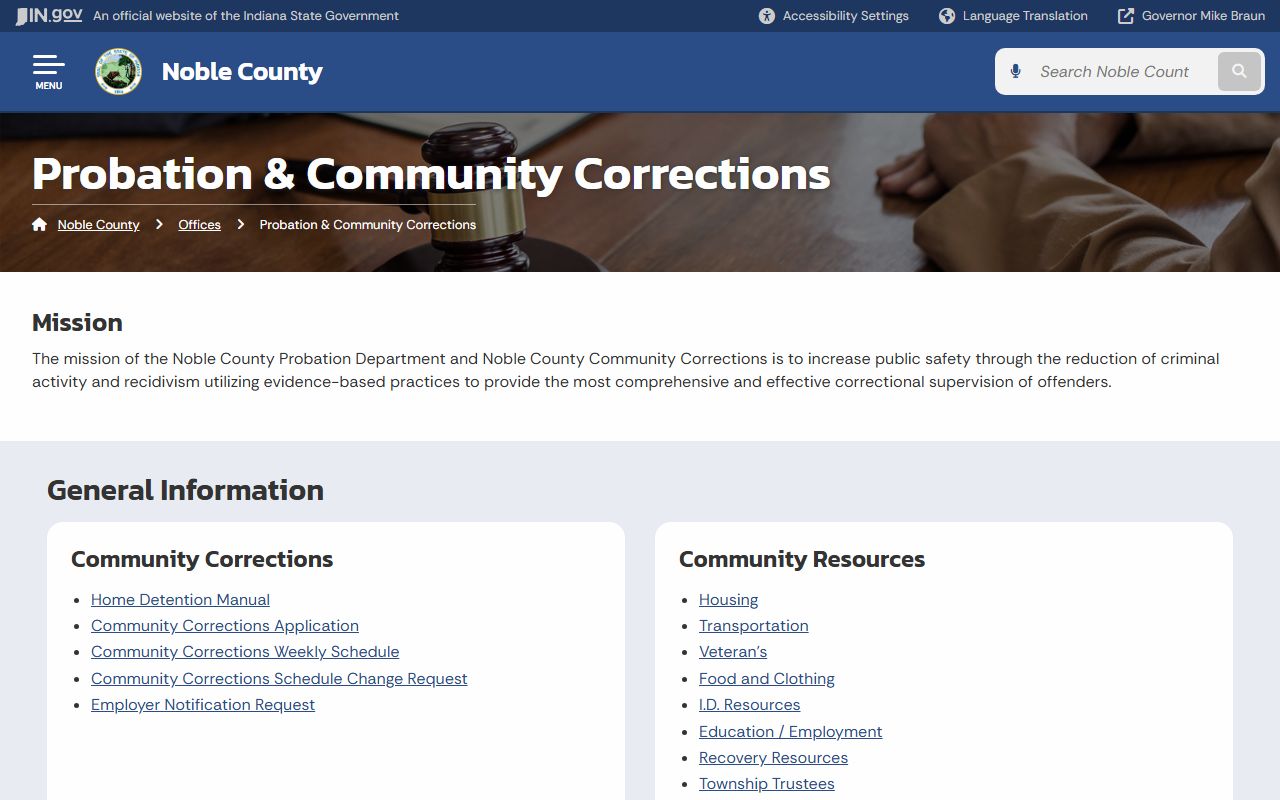
Probation and Community Corrections matter because sentencing entries can lead to supervision, pretrial services, work release, or problem-solving court activity.
What Noble County Criminal Records Show
The criminal case file can be read field by field. The cause number ties the case to Indiana's court numbering system. The court field shows whether the case is in Circuit Court or a Superior Court division. Charges are listed by count, with a statute, offense description, level or class, offense date, and disposition when public. The chronological case summary adds the dated path from filing through hearings, plea, sentence, and later enforcement entries.
| Field | What It Shows |
|---|---|
| Case Number | Indiana cause number tied to Noble County, court, filing period, case type, and sequence. |
| Defendant | Name of the person charged, with protected or sealed data removed from public view. |
| Court | Noble Circuit Court for many Level 3 through Level 5 felonies, or Noble Superior Court II for many misdemeanors. |
| Charges | Count number, statute, offense name, level or class, offense date, and charge status when public. |
| Bond or release | Bond amount, bond type, release conditions, or changes when entered publicly. |
| Plea | Formal answer to the count, such as guilty, not guilty, or later plea agreement entry. |
| Disposition | Outcome for the charge or case, including guilty, dismissed, acquitted, or amended outcomes. |
| Sentence | Jail or prison term, suspended time, probation, restitution, fines, costs, and conditions. |
| Warrant or body attachment | Failure-to-appear, probation violation, contempt, or support-related enforcement entries when public. |
Noble County Charges vs Convictions
A charge is an accusation filed in court. A conviction is an outcome after a guilty plea, guilty verdict, or other legally recognized finding of guilt. A Noble County criminal court record may show charges that were amended, reduced, dismissed, or tried. That is why reading only the first charge line can be misleading. The disposition and sentence entries show what happened to each count.
| Point | Charge | Conviction |
|---|---|---|
| Meaning | A filed accusation by the State. | A final guilty outcome by plea or verdict. |
| Where it appears | Charge section and early docket entries. | Disposition, judgment, and sentence entries. |
| Can it change? | Yes, counts may be amended, reduced, or dismissed. | Post-judgment changes are more limited and may require appeal, modification, or expungement. |
| How to read it | Check every count, level, statute, and status. | Read the disposition and sentence for the final result. |
Reading Noble County Sentences
Disposition and sentence entries are the most important parts of a criminal court record for outcome research. A disposition is the result of a count or case. It can show a guilty plea, guilty verdict, dismissal, acquittal, amendment, or other outcome. A sentence is the penalty or set of court-ordered terms imposed after conviction. Sentencing may include executed time, suspended time, probation, restitution, fines, court costs, community service, no-contact orders, treatment, monitoring, or problem-solving court conditions.
Noble County Probation and Community Corrections provides context for some sentence terms. The office describes home detention with GPS monitoring, work release, problem-solving courts, pretrial services, alcohol monitoring, community transition, community service, and Court Alcohol and Drug Program assessments. A criminal case record may not explain program details, but the docket can show orders or hearings tied to supervision and compliance. If a person cannot afford an attorney, the Circuit Court FAQ says the request for appointment must be in writing, and the court will set a hearing to determine indigency.
Sealed and Expunged Criminal Records
Sealed and expunged records are not the same. A sealed record is hidden from ordinary public access by law or court order. An expunged record changes public access under Indiana's expungement statute, and the effect depends on the type of case and statutory category. Arrest-only or non-conviction records are treated differently from conviction records. Waiting periods and eligibility depend on offense level, sentence completion, and other conditions, and some serious felony situations may require prosecutor consent for earlier filing.
| Point | Sealed | Expunged |
|---|---|---|
| Public visibility | Hidden from ordinary public view by rule or court order. | Removed or limited from public access depending on the Indiana expungement category. |
| How it starts | May result from confidentiality law, court order, or protected case type. | Usually starts with a petition under Indiana Code 35-38-9. |
| Online result | May not appear, or may show limited public information. | Pending or denied expungement may appear, while granted relief can remove public access. |
| Local action | Ask the clerk or court about party access or required motion. | File in the court that handled the case and use legal-help or attorney review when possible. |
Public Access to Noble County Criminal Records
Indiana Code 5-14-3 states the state's general public-records policy and the right to inspect and copy public records unless a rule or statute makes a record confidential or discretionary. For court records, the Indiana Rules on Access to Court Records are the specific framework. Rule 4 sets the broad access rule, and Rule 5 identifies records excluded from public access. These limits explain why public MyCase can show a criminal case while hiding certain documents or data fields.
Juvenile records are a separate concern. Indiana Code Title 31 includes juvenile-record confidentiality rules, and the research notes that juvenile court records are generally confidential except as allowed by law. Adoption, mental-health, sealed, expunged, and protected-party information is also limited. Protection order cases are not found in ordinary MyCase search because protected-person identifying information is excluded from online public access.
Note: The public criminal case view may omit documents that parties, attorneys, or the court can access through different channels.
The family and juvenile law image assigned to this page comes from Indiana Code Title 31.
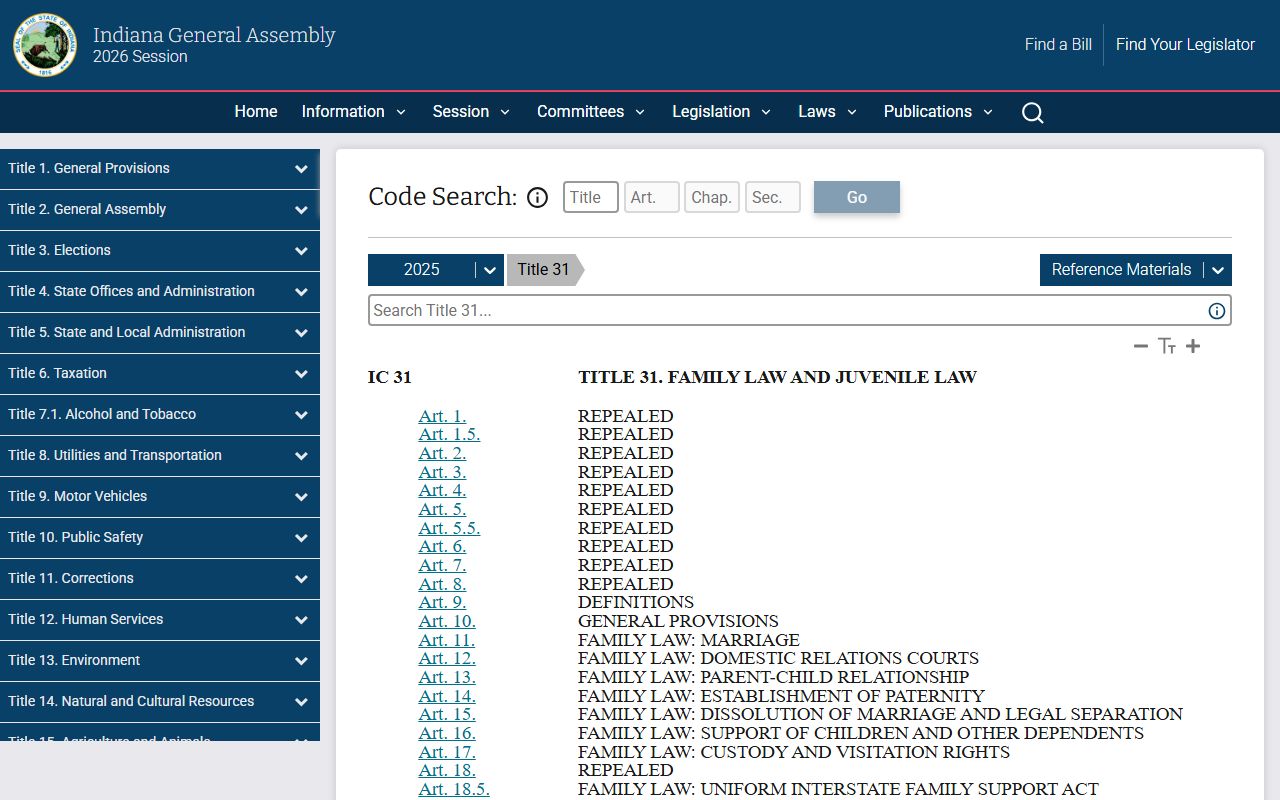
That statute source is relevant because juvenile matters and protected family details are not ordinary public criminal court records.
Criminal Records and Background Checks
A court record lookup is not the same thing as a regulated employment, tenant, credit, insurance, or licensing background check. A public search can help identify a court case, but it may be incomplete, old, redacted, or changed by later orders. The official record should be verified with the court or clerk before relying on it for a legal purpose. Case status, dispositions, and expungement orders are especially important because a filed charge is not the same as a conviction.
Important: Public case lookup should be verified with the originating court before any legal or official use.
Restricted Noble County Criminal Records
Some criminal-record information is restricted because of age, case type, sealing, expungement, investigation status, victim protection, or personal privacy rules. Juvenile delinquency records are often confidential. Sealed warrants and search warrants may remain hidden while an investigation is active. Mental-health and treatment details are sensitive. Social Security numbers, financial account numbers, protected addresses, minor identifiers, and confidential medical information are redacted from public records.
If a criminal case cannot be found, use a careful fallback chain. Search MyCase again with fewer filters. Try the cause number if known. Use the public terminal in the courthouse basement. Contact the Clerk of the Noble County Courts for public document availability or certified copies. For custody status, use jail channels instead of the court case file. For the broad structure of public and non-criminal case files, use the general Noble County court records overview.